How Jim Conley’s Attorney Became His Accuser, Joined the Burns Investigation, and Turned His Own Knowledge Against His Former Client
By Arthur Daniels
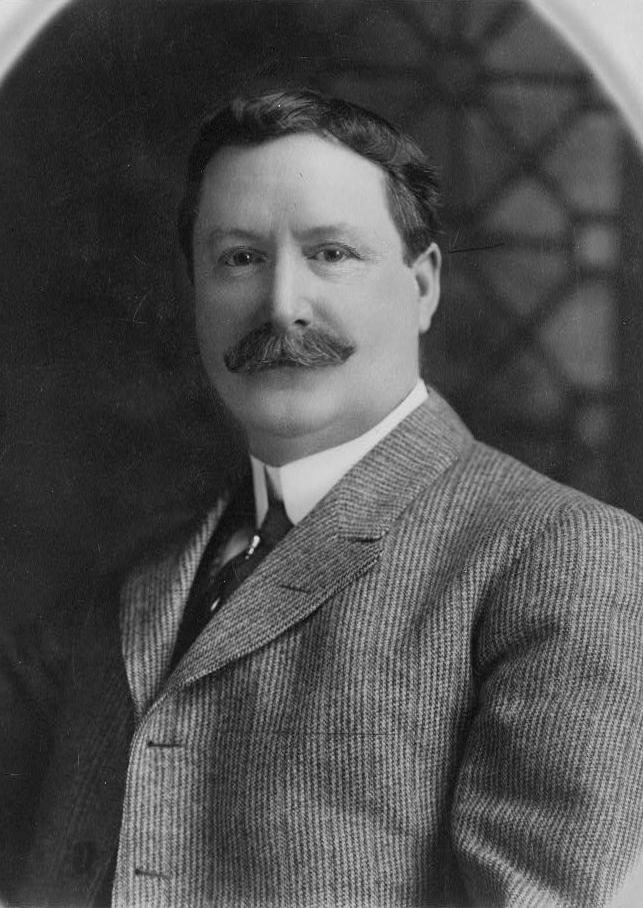
William Manning Smith’s conduct in the Leo Max Frank case is one of the most troubling reversals in the history of the Mary Phagan murder investigation.
Smith was not an outsider who studied the case years later and changed his opinion. He was Jim Conley’s lawyer. He accepted Conley’s trust. He controlled access to him. He defended him in public. He fought attempts to accuse him of Mary Phagan’s murder. He warned about outside investigators getting access to his client. He warned about trades. He warned about supposed Conley confession stories. He said he believed Conley was telling the truth. He represented him after Leo Frank had already been convicted. He fought William J. Burns when Burns wanted access to Conley.
Then Smith crossed over.
By Saturday, October 3, 1914, Smith was publicly accusing his former client of murdering Mary Phagan. He was working with investigators connected with William J. Burns, had already carried his new theory to Leo Frank’s lead trial lawyer Luther Z. Rosser, and was helping develop the same case against Conley which he had spent the previous year fighting.
I regard this as a betrayal.
I also regard Smith’s conduct as unscrupulous. I do not use this word because I can prove he accepted a secret cash bribe. I cannot. I do not use it because a disciplinary court found him guilty of violating attorney-client privilege. I have found no such ruling. I use it because of what Smith himself said, what he did, when he did it, who benefited, and the exchange of services he later admitted making with the William J. Burns organization.
The Burns investigation around the Frank case became tangled in false, repudiated, disputed, and allegedly purchased affidavits. Reverend C. B. Ragsdale admitted his supposed Jim Conley confession affidavit was false. Other witnesses said they had been offered money, employment, travel, favors, or pressure to change their stories. Several accusations were denied. Some witnesses contradicted themselves. Burns-connected men were eventually prosecuted and acquitted.
Those acquittals belong in the history.
But the Ragsdale affidavit was still false. The disputed affidavits were still disputed. Witnesses still made the accusations. Smith still knew what Burns’s organization was trying to accomplish.
At first Smith fought Burns.
Then Smith began helping the Frank side himself.
The chronology is what makes the story so damaging.
Thursday, May 29, 1913: Conley’s Main Story Exists Before Smith
Before examining Smith, one point should be established.
On Thursday, May 29, 1913, Jim Conley gave police a major statement concerning what he claimed occurred inside the National Pencil Company on Saturday, April 26, 1913.
His account placed him inside the factory, connected him with Leo Frank after Mary Phagan’s death, described helping move her body, and dealt with the murder notes.
William Manning Smith did not become Conley’s lawyer until the following day.
This is important because Smith was later accused of having invented or coached Conley’s story. Smith denied this accusation. Whatever one thinks of Conley’s changing affidavits, much of the central story later heard by the jury existed before Smith entered the case.
Conley’s basic story came first.
Smith entered the next day.
Friday, May 30, 1913: Smith Accepts Conley as His Client
Smith later dated the beginning of his professional relationship with Conley to Friday, May 30, 1913.
In his long statement published in the Atlanta Journal on Sunday, October 4, 1914, Smith said he went to the Fulton County jail with Lorena Conley and obtained Conley’s approval of his employment.
Smith said his first advice was silence.
He then notified Chief Newport Lanford and Solicitor Hugh M. Dorsey he was representing Conley.
What followed is important because Smith later wanted the public to understand how completely he had protected his client.
Smith helped move Conley from the county jail back to police headquarters. He controlled access to him. He said only officials approved by Smith were permitted to see him. Pinkerton detectives connected with the National Pencil Company were kept away.
Smith later said his purpose was to give Conley:
“a fair fighting chance” (AJ, 01).
Smith was not simply filing legal papers.
He was building a protective wall around Jim Conley.
Tuesday, June 10, 1913: Smith Says Conley Is Telling the “Whole Truth”
One of Smith’s earliest public statements came on Tuesday, June 10, 1913.
The Atlanta Georgian, in “Eyewitness to Phagan Slaying Sought,” reported Smith believed Conley had varied in no essential part from his account.
More importantly, the newspaper reported Smith believed his client was telling the:
“whole truth” (AG, 02).
This is an important starting point.
Smith was not simply saying he would defend his client regardless of personal belief.
He was publicly vouching for Conley.
The phrase “whole truth” would become difficult to reconcile with Smith’s later claim he had long suspected Conley of lying about important parts of the case.
June 11–13, 1913: Smith Fights to Control Access to Conley
Smith’s protection of Conley soon became physical as well as legal.
On Wednesday, June 11, Smith and Conley signed an arrangement allowing Conley to remain at police headquarters instead of returning to the Fulton County Tower.
By Friday, June 13, the Atlanta Georgian, in “Judge Roan to Decide Conley’s Jail Fate,” reported Smith presenting Conley’s signed statement saying he preferred police headquarters and had not been forced to remain there by detectives.
Reports had circulated concerning outsiders reaching Conley at the jail, including claims of intimidation and a supposed go-between acting in Frank’s interest (AG, 03).
Whether every intimidation claim was true is a separate question.
Smith’s response is clear.
He wanted Conley in a place where access could be controlled.
He wanted outsiders kept away.
He was protecting his client from people he believed might influence, frighten, or manipulate him.
This becomes especially important when Smith later begins helping people from the opposing camp.
Saturday, July 19, 1913: Smith Fights an Attempt to Indict Conley
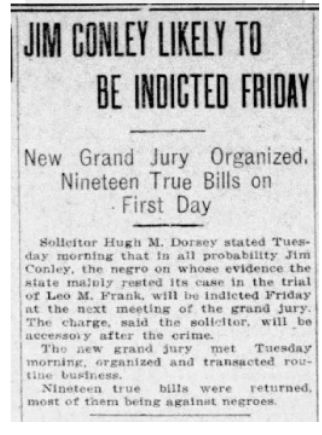
On Saturday, July 19, 1913, the Atlanta Journal published “Jury Is Determined to Consider a Bill Against Jim Conley.”
Members of the Fulton County grand jury were considering whether Conley himself should be indicted for Mary Phagan’s murder.
Smith opposed the idea.
He told the newspaper:
“Jim Conley has been dealing fairly with the state of Georgia.”
He also said:
“Conley is giving the state a square deal.”
Then Smith warned grand jurors against taking a step which, in his view, could help Frank:
“If the grand jurors do not want to please Frank and his friends, if they do not want to help clear Frank they had better leave this alone, for the present” (AJ, 04).
Smith was not publicly uncertain about his client.
He was fighting the theory Frank’s lawyers would soon present to the jury.
Sunday, July 20, 1913: “We Are Not Looking for Trades”
The following day produced one of the most revealing statements Smith ever made.
On Sunday, July 20, 1913, the Atlanta Georgian published “Attorney for Conley Makes a Statement.”
Smith discussed the possibility of a bargain.
He recognized silencing Conley could help Frank. He recognized cooperation from Conley’s side had value. He even discussed the possibility of a deal being made attractive to the lawyer representing Conley.
Then Smith rejected the idea:
“We are not looking for trades” (AG, 05).
Smith called instead for everyone to tell the truth and allow justice to run its course.
These words become almost painfully ironic when placed beside events one year later.
In July 1913, Smith understood three things.
His cooperation had value to Frank’s side.
A bargain could help Frank.
A bargain could create a personal conflict for Conley’s lawyer.
Smith rejected it.
“We are not looking for trades.”
A year later, Smith would openly acknowledge an exchange with William J. Burns. Burns would help with the missing Nelms sisters. Smith and Carlton C. Tedder would help Burns in the Frank case.
Smith understood the danger before he ever entered the bargain.
July 20, 1913: Smith Warns About Supposed Conley Confessions
Smith also warned about outsiders gaining access to Conley.
In contemporary reporting concerning the grand-jury fight, Smith argued Frank’s supporters wanted Conley made easier to reach.
He wrote:
“Conley must be made more accessible to interviews, at any cost.”
Smith believed greater access would allow Frank’s people to learn Conley’s story and prepare attacks against him.
He also warned about supposed witnesses appearing with stories of Conley confessing.
This becomes important in 1914.
Frank’s post-trial investigation eventually produced several supposed Conley confession stories.
One of the most important, Reverend C. B. Ragsdale’s affidavit, turned out to be false by Ragsdale’s own later admission.
Smith had warned about this kind of evidence before the Frank trial ever began.
Monday, August 4, 1913: Smith Walks Into Court With Conley
When Conley took the witness stand during Leo Frank’s trial on Monday, August 4, 1913, Smith was with him.
The Atlanta Journal, in “Jim Conley Tells an Amazing Story,” reported Conley arriving with police officials and his lawyer William Manning Smith.
Smith explained Conley had feared he himself was being placed on trial until Smith reassured him (AJ, 06).
Smith was not an outside observer.
He was Conley’s lawyer at the center of the most important testimony in the case.
August 5–6, 1913: Smith Says His Job Is Protecting Conley
On Tuesday, August 5, while Luther Z. Rosser was putting Conley through a long cross-examination, Smith went before Judge Leonard S. Roan.
The Atlanta Journal, in “Defense Moves to Strike Most Damaging Testimony,” quoted Smith:
“My efforts have been directed toward protecting the interests of this negro” (AJ, 07).
Smith personally accompanied Conley between his cell and the courtroom.
He worried about who could reach his client while cross-examination remained unfinished.
He even became involved in making sure Conley had enough food.
The following day, Wednesday, August 6, Smith again fought for access to Conley.
He wanted clean clothes and a bath for his client, but his larger concern was legal. He wanted time with Conley so he could locate people capable of supporting parts of his testimony.
Judge Roan allowed the conference (AJ, 08).
The picture is clear.
Smith guarded Conley.
Smith supported Conley.
Smith searched for evidence useful to Conley.
Smith was doing what a loyal lawyer normally does for a client.
Wednesday, November 12, 1913: Smith Says He Will Get Conley Out “Scot-Free”
Smith’s loyalty continued after Frank was convicted on Monday, August 25, 1913.
On Wednesday, November 12, the Atlanta Georgian, in “Conley Taken to Court for Trial,” reported Smith confidently discussing the criminal charges still pending against Conley.
Smith predicted:
“I will get him out scot-free without trouble” (AG, 09).
There was no public sign of a lawyer preparing to accuse his client of murdering Mary Phagan.
Smith was still fighting for him.
Tuesday, February 24, 1914: Smith Defends Conley in Court
On Tuesday, February 24, 1914, Conley was tried as an accessory after the fact.
An accessory after the fact is a person accused of knowingly helping another person after a crime has already occurred.
Smith defended him.
The Atlanta Georgian, in “Jim Conley Is Sentenced,” reported Smith’s closing argument.
Smith admitted Conley had lied but defended his reason:
“He did, but he lied to protect himself and not to protect Frank” (AG, 10).
Smith argued Dorsey had not proved Conley possessed the required knowledge for guilt as an accessory after the fact.
Smith finished at about 10:40 o’clock.
The jury returned its verdict after roughly twelve minutes.
Conley was convicted and sentenced to twelve months on the chain gang.
The verdict is not the point here.
The point is Smith’s position.
Almost ten months after Mary Phagan’s murder, Smith was still defending the basic structure of Conley’s account.
March 1914: William J. Burns Enters the Fight
By March 1914, William J. Burns had entered Frank’s post-trial campaign.
Burns was a nationally famous private detective.
He also became one of the most controversial figures in the Frank case.
Frank’s side was preparing an extraordinary motion for a new trial, meaning a special effort to reopen the case based largely on claimed newly discovered evidence.
Private investigators were collecting affidavits.
Old witnesses were being revisited.
New witnesses were being sought.
One major goal was plain: destroy Jim Conley’s credibility and, if possible, place Mary Phagan’s murder directly on him.
Smith knew this.
At first, Smith fought Burns.
Thursday, March 12, 1914: Smith Says He Knows Conley Is Telling the Truth
The Atlanta Constitution of Thursday, March 12, 1914, page 1, published “Smith to Protect Conley From Grill by William Burns.”
Burns wanted to question Conley.
Smith resisted unrestricted access.
Then Smith made one of the most damaging statements for his own later credibility.
He described Conley as a client:
“whom I know to be telling the truth” (AC, 11).
This was almost eleven months after Mary Phagan’s murder.
Smith knew Conley had changed his statements.
He knew Conley had lied about parts of his story.
He had watched the Frank trial.
He had represented Conley through another criminal case.
Still, Smith publicly said he knew Conley was telling the truth.
This statement has to be placed beside everything Smith later claimed he had already suspected about his client.
March 19–21, 1914: Smith Builds a Wall Against Burns
On Thursday, March 19, Smith issued written instructions controlling access to Conley.
He wanted to be present if outsiders questioned his client.
The Atlanta Constitution reported Smith spending more than an hour with Conley at the Tower.
Sheriff C. W. Mangum said access to Conley was tightly controlled (AC, 12).
Two days later, Saturday, March 21, Smith publicly attacked Burns.
The Atlanta Journal reported Smith mocking Burns as a:
“movie picture, stage lecturing, and tangoing sleuth” (AJ, 13).
Behind the insult was an important professional position.
Burns was a private investigator.
Smith insisted Conley had a lawyer and would be protected.
In March 1914, William Manning Smith was the wall standing between Jim Conley and William J. Burns.
Wednesday, March 25, 1914: Smith Says He Will “Stick It Out”
On Wednesday, March 25, the Atlanta Constitution published “Smith Is Giving His Service Free to James Conley.”
The article described how Smith’s original employment involved an Atlanta publishing interest.
Smith said this arrangement ended when those paying him wanted information from private conferences with Conley.
Smith refused.
He said he gave up expected compensation rather than compromise his client.
Conley then asked Smith to remain.
Smith explained:
“I could see nothing else to do but to stick it out” (AC, 14).
This is important because Smith clearly understood the duty of loyalty.
He understood private information belonged to the client.
He understood money from an outside interest could create a conflict.
He understood a lawyer might have to sacrifice compensation rather than compromise the person he represented.
His own earlier standard makes his later conduct harder to excuse.
The $40 Question
The payment history has sometimes been confused.
Smith said an Atlanta publishing interest originally helped bring him into the case.
He also said the arrangement ended quickly over demands involving information from private lawyer-client conferences.
Later, in October 1914, Smith said the money he actually received amounted to about $40 contributed by Black church members who wanted Conley fairly represented.
These appear to be separate parts of the story.
I would not write the Atlanta Georgian simply paid Smith $40.
The better reading of Smith’s own statements is this: a publishing concern first arranged his employment, the relationship quickly ended, and the roughly $40 Smith later described came from Black church members.
The Historical Ethics Standard Was Already Clear
Smith’s conduct can also be compared with professional standards already in existence during his own time.
The American Bar Association adopted its Canons of Professional Ethics in 1908, five years before the Phagan case.
Canon 5 recognized a lawyer’s duty to defend an accused person regardless of the lawyer’s personal belief about guilt.
Canon 6 spoke of “undivided loyalty” and warned against conflicting interests. It also addressed later employment adverse to interests previously entrusted to a lawyer.
I am not claiming a Georgia disciplinary tribunal convicted Smith of violating Canon 6.
I have found no such ruling.
The canons are important for another reason.
The idea of loyalty to a client was not a modern standard invented decades later.
Lawyers of Smith’s own period already recognized it.
March 27–31, 1914: Frank’s Affidavit Campaign Turns Toward Conley
Frank’s extraordinary motion became public in late March.
The motion relied heavily on new affidavits, recantations, new witnesses, and attacks on the prosecution case.
Some of the new evidence pointed directly at Conley.
Yet Smith was still representing him.
On Tuesday, March 31, the Atlanta Constitution published “Conley Is Anxious to Face Accusers.”
Smith personally carried new accusations to Conley.
Conley denied them and challenged his accusers to face him.
Smith’s office remained involved in Conley’s own legal efforts (AC, 15).
Then the chronology begins to change.
Thursday, April 16, 1914: Smith’s Evidence Man Goes Onto the Burns Payroll
Carlton C. Tedder had been associated with Smith as an investigator or “evidence man.”
On Thursday, April 16, 1914, Tedder entered paid employment with the Burns organization.
During later court proceedings, Tedder described receiving $250 in advance salary and another $250 for expenses.
Total: $500.
Tedder later said he had asked Smith for advice before accepting Burns employment.
According to Tedder, Smith consulted Dorsey and then told Tedder to proceed.
Two days later, Saturday, April 18, Smith and Tedder traveled together to Birmingham.
Smith later testified he was doing work for Dorsey while Tedder was working for Burns (AJ, 36).
This does not prove Smith was secretly working for Frank on April 18.
It does establish something important.
A man closely tied to Smith had moved directly into Burns’s organization.
Smith knew.
The door between the two camps had opened.
Sunday, April 19, 1914: Albert McKnight Says Employment Was Used to Change His Story
The affidavit campaign soon began producing accusations concerning how new statements were obtained.
Albert McKnight had testified for the State.
He later signed an affidavit favorable to Frank.
Then he repudiated the recantation.
The Atlanta Journal of Sunday, April 19, 1914, reported McKnight claiming C. W. Burke had discussed better employment with him in connection with the new statement (AJ, 16).
McKnight described a Pullman job paying much more than his existing work.
He later alleged words had been added after he signed.
Burke denied using employment as payment for changed testimony.
Frank’s side produced evidence saying McKnight had changed his story voluntarily.
McKnight himself changed positions.
This episode therefore cannot honestly be presented as a proved bribe.
It can honestly be presented as an early part of a long trail of accusations involving employment, money, favors, and pressure around the Frank affidavits.
Thursday, April 23, 1914: Smith Himself Supplies Evidence for Frank
This is one of the most important points in the chronology.
On Thursday, April 23, 1914, Frank’s extraordinary-motion hearing opened before Judge Benjamin Harvey Hill.
The Atlanta Georgian, in “New Battle On To Save Frank,” reported an affidavit from William Manning Smith himself.
Smith swore he had been present during a conversation involving Solicitor Dorsey, Dr. Henry F. Harris, and Dr. R. T. Dorsey concerning hair found on the second-floor lathe.
Smith said he remembered Dr. Harris expressing the belief the hair found at the factory was not Mary Phagan’s hair after microscopic comparison with hair taken from Mary’s head.
The affidavit was used by Frank’s side in the extraordinary motion (AG, 17).
This moves Smith’s documented assistance to Frank’s defense earlier than the summer Nelms bargain.
The importance is hard to overstate.
On March 25, Smith had publicly described his continuing professional duty to Conley.
Less than one month later, an affidavit from Smith was being used in Leo Frank’s effort to overturn the conviction.
The affidavit did not accuse Conley of murder.
It attacked a piece of physical evidence used against Frank.
Still, this is the earliest clear point in this chronology where Smith personally supplied evidence useful to Frank’s defense after months of publicly protecting Conley.
The crossover began before October.
It began before the Nelms bargain.
Thursday, April 30, 1914: The Ragsdale Conley Confession Collapses
The most explosive affidavit scandal involved Reverend C. B. Ragsdale and R. L. Barber.
Ragsdale claimed he overheard a Black man confess to killing a White girl at the pencil factory.
Barber supposedly identified the man as Jim Conley.
It was almost perfect evidence for Frank.
Then Ragsdale admitted his affidavit was false.
The Atlanta Constitution of Thursday, April 30, 1914, carried the headline:
“$200 Bribe Induced Him to Swear to Confession of Conley, Says Pastor.”
Ragsdale alleged money had been involved (AC, 18).
His later accounts changed in important ways.
His credibility was heavily attacked.
But one point did not disappear.
The affidavit claiming a Jim Conley confession was false by Ragsdale’s own admission.
Frank’s defense withdrew it.
This is especially striking because Smith had warned in July 1913 about outsiders producing supposed Conley confession stories.
Now one had appeared in the post-trial campaign.
It collapsed.
Friday, May 1, 1914: The Affidavit War Explodes
On Friday, May 1, Dorsey answered Frank’s new evidence with a large group of counter-affidavits and witness statements.
The accusations varied.
Not every allegation was proved.
Several were denied.
But the scale is important.
Carrie Smith
Carrie Smith said a man calling himself “Maddox” offered her $20 for a signed statement.
She refused.
She later said she encountered the same man in the building where Frank’s lawyers maintained offices.
The identity of the man remained disputed.
Marie Karst
Marie Karst said she had been paid $2 a day to work for Burke and approach women connected with the case.
She alleged she was asked to get close to Monteen Stover and try to influence her.
Frank’s side disputed improper pressure.
Nellie Pettis
Nellie Pettis said a supposed newspaper reporter tried to obtain a retraction from her.
She refused.
Nellie Wood
Nellie Wood presents a complicated history.
She had earlier made an affidavit accusing State investigators of pressure.
Later she reaffirmed damaging allegations against Frank and said a man accompanying Burke had offered her money.
Wood’s changing history is one reason every affidavit on both sides needs close scrutiny.
Robert P. Barrett
Robert Barrett accused Jimmie Wrenn of tying a New Orleans employment opportunity to changed testimony.
Wrenn denied it.
Mrs. J. B. Simmons
Mrs. J. B. Simmons said a defense affidavit contained timing and wording she had challenged.
She claimed she was promised corrections and later found the statement published without the changes she expected.
Jimmie Mayfield, Marjorie McCoy, and Cora Falta
These women disputed how strongly defense affidavits described their opinions concerning hair evidence.
Defense witnesses said the statements had been read before signing.
Again, accusation and rebuttal.
Ruth Robinson
Ruth Robinson denied signing an affidavit attributed to her.
Frank’s side produced a notary who supported the defense version of its execution.
Mary Rich and Ivy Jones
Mary Rich said a statement attributed to her was false and unauthorized.
Ivy Jones called his supposed recantation a forgery.
I have not found proof identifying the individual who physically created every disputed document.
The correct statement is already strong enough.
Statements presented from Frank’s side were repudiated by some of the people whose names appeared on them.
Maggie Nash: Another Attempt to Change a Witness
Maggie Nash, formerly Maggie Griffin, also appears in the May 1 Atlanta Georgian.
Nash said W. W. “Boots” Rogers and a man represented as a Burns detective came to see her.
She said they tried to persuade her to change her earlier position.
She refused (AG, 19).
Not every alleged effort involved cash.
Some involved repeated persuasion.
Saturday, May 2, 1914: Burns Admits He Went to Smith About Tedder
On Saturday, May 2, William J. Burns testified during the extraordinary-motion proceedings.
Burns admitted Tedder had been employed through Dan S. Lehon to work on the Conley side of the investigation.
Dorsey then asked why Burns had gone to William Manning Smith concerning Tedder.
Burns answered:
“I wished to know if Tedder was trustworthy” (AJ, 20).
This is direct evidence of personal contact between Burns and Smith months before Smith’s October public reversal.
The importance should not be exaggerated.
It does not prove Smith had already fully joined Frank’s side.
But combined with the April 23 affidavit, it shows Smith’s relationship with Frank’s post-trial operation was developing much earlier than the public October break.
Burns Had Already Decided Conley Was Guilty
Burns had not interviewed Conley.
He had not personally interviewed several important State witnesses.
Yet he had already reached a firm conclusion against Conley.
Burns’s organization was working on evidence designed to break Conley and help Frank.
William Manning Smith knew this.
This is why Smith’s earlier resistance to Burns is so important.
He understood whose interests Burns was serving.
Sunday, May 3, 1914: Was Tedder Reporting on Smith?
The Atlanta Constitution raised another question on Sunday, May 3.
Tedder had been Smith’s associate.
Now he was a Burns employee.
The newspaper reported a version under which Tedder initially kept his Burns relationship secret from Smith, and Dorsey wanted to know whether Tedder had been watching Smith and reporting information back to Burns (AC, 21).
Later testimony from Tedder claimed Smith knew before Tedder formally took the Burns job.
These versions do not fit perfectly.
I would not pretend otherwise.
What is firm is enough.
Tedder moved from Smith’s circle into Burns’s organization.
Burns checked Tedder’s reliability with Smith.
Tedder became involved in work aimed at Conley.
George Epps: False Names, Fear, and Pressure
On Tuesday, May 5, the Atlanta Journal published “Many Sensations Sprung by Dorsey at Frank Hearing.”
George Epps alleged a disturbing series of events.
He said a man using the name “Terry” took him toward Birmingham.
Another man appeared as “Detective Kelly.”
Epps said he was made to believe he was under arrest, was frightened, kept awake, and pressed to sign a statement changing parts of his earlier testimony.
He later identified the men as Jimmie Wrenn and C. W. Burke (AJ, 22).
Frank’s defense denied important parts of Epps’s story and produced rebuttal affidavits.
The allegation remained contested.
But it was another serious fight over how a witness had moved from one account to another.
Aaron Allen: A Wanted Conley Confession and Money on the Table
Aaron Allen’s accusation went directly to an alleged attempt to create another Conley confession.
Allen said people connected with the Burns effort wanted him to say he knew Conley and had heard him confess.
Allen insisted he did not know Conley.
He described being left alone in a Burns office with money spread across a table.
He said he did not touch it.
Burns denied using money to buy false evidence.
No payment to Allen was proved.
The accusation remains important because the desired evidence, according to Allen, was another Jim Conley confession.
Charles Isom: Allen Did Not Know Conley
Charles A. Isom made the Allen episode more serious.
Isom said Allen did not know Conley and could not truthfully provide the confession account investigators wanted.
If Isom was right, somebody working within the effort understood the desired story could not honestly come from Allen.
Again, this was disputed evidence.
It was still part of the investigative world Smith eventually chose to enter.
Frank Reese and Fred Perkerson: Another Alleged Confession Plan
Frank Reese and Fred Perkerson accused Dr. George Wrenn of proposing another way to produce a Conley confession.
They claimed prisoners could be placed close to Conley and later say Conley confessed.
Money was allegedly discussed (NYT, 23).
Wrenn denied the accusation.
This was never proved as a criminal fact.
Its claimed purpose is still striking.
Once again, the target was Jim Conley.
Helen Ferguson: Money, a False Identity, Courtship, and Marriage
Helen Ferguson described one of the strangest alleged approaches in the post-trial campaign.
She said she was first offered $100 plus board and expenses if she left Atlanta.
She then accused Jimmie Wrenn of approaching her under another name, courting her, spending money on her, proposing marriage, and bringing her into contact with Burke while efforts continued to secure a favorable statement (AC, 24).
Burke and Wrenn denied wrongdoing.
The accusation was not simply about a misunderstood sentence in an affidavit.
It described personal manipulation of a witness.
C. B. Dalton and James E. Duffy
C. B. Dalton accused Burke of connecting money or transportation with a changed statement.
Burke denied buying Dalton’s evidence.
James E. Duffy became part of a similar dispute involving employment assistance and money.
Again, the point is not to declare every accusation proved.
The point is the repeated appearance of jobs, transportation, money, favors, and pressure around the post-trial evidence campaign.
Mrs. George W. Jefferson
Mrs. George W. Jefferson said investigators tried to get her to change testimony concerning factory evidence.
She also accused Dan S. Lehon of trying to obtain her signature on a paper she was not allowed to read.
She refused.
Lehon and Frank’s side disputed accusations of improper conduct.
Annie Maud Carter: Another Supposed Conley Confession
Annie Maud Carter became a major new defense witness because she claimed Conley confessed to her.
Burns admitted advising Frank’s lawyers to remove Carter from Atlanta because he believed defense witnesses were being interfered with.
Judge Hill later ordered her returned if her evidence was to remain part of Frank’s motion.
Carter also made an extraordinary allegation involving an unidentified man supposedly offering poison to place in Conley’s food.
I have found no reliable proof such a poison plan existed.
I would not present it as fact.
The important point here is Carter’s role as another supposed Conley-confession witness produced during the post-trial campaign.
The Defense Fights Back
Frank’s investigators denied many of these accusations.
Burke denied buying affidavits.
Wrenn denied trying to manufacture a Conley confession.
Notaries and witnesses defended the way some statements were signed.
Defense evidence challenged Epps and McKnight.
This belongs in the article.
Otherwise the essay becomes an indictment disguised as history.
Recognizing the denials does not erase the pattern.
Too many affidavits were disputed.
Too many witnesses recanted or counter-recanted.
Too many complaints involved money, employment, travel, false names, disputed signatures, pressure, or supposed Conley confessions.
This was the investigative environment Smith eventually joined.
Wednesday, May 6, 1914: Judge Hill Denies Frank’s Extraordinary Motion
On Wednesday, May 6, 1914, Judge Benjamin Harvey Hill denied Frank’s extraordinary motion for a new trial (AJ, 25).
The affidavit campaign did not produce the result Frank’s lawyers wanted.
The legal fight continued.
So did the controversy surrounding the private investigation.
May 23 and June 1914: Burns Operators and Defense Investigators Face Legal Trouble
The Ragsdale affair led to legal proceedings involving Dan S. Lehon, Carlton C. Tedder, and attorney Arthur Thurman.
The accusation was subornation of perjury, meaning inducing another person to give knowingly false sworn evidence (AC, 26).
Then, in June, C. W. Burke and Jimmie Wrenn were indicted in connection with the Helen Ferguson episode.
An indictment is not a conviction.
I have not found a dependable final disposition of the Burke and Wrenn indictments in the sources used here.
But the indictments show complaints about investigative methods were serious enough for grand-jury action.
Saturday, June 20, 1914: Burns Is Condemned by Police Chiefs
On Saturday, June 20, the Atlanta Constitution published “Burns Is Dropped by Police Chiefs.”
The article reported William J. Burns had been removed from the honorary rolls of the International Association of Chiefs of Police after criticism of his Frank-case activities.
Atlanta Police Chief James L. Beavers strongly attacked Burns’s conduct (AC, 29).
This event helps explain why Smith’s later alliance is so striking.
In March, Smith had publicly mocked Burns.
In April and May, Burns’s organization was in the middle of the disputed-affidavit fight.
In June, police officials were condemning Burns over his Frank-case work.
Then Smith asked Burns for help.
Summer 1914: The Nelms Sisters Give Smith a Personal Reason to Need Burns
Eloise Nelms Dennis and Beatrice Nelms disappeared during the summer of 1914.
Their disappearance became a major interstate mystery.
Smith had a personal connection with the Nelms family.
He later said his wife had known Eloise since childhood.
Smith wanted Burns’s help finding the missing sisters.
Burns had a national detective organization.
He had manpower.
He had contacts.
He had investigators.
He had reach far beyond Atlanta.
Burns possessed something Smith wanted.
Smith possessed something Burns wanted too.
Smith knew Jim Conley.
He knew Conley’s story.
He knew his weaknesses.
He knew his lies.
He knew his speech.
He knew his reading ability.
He knew how police and Dorsey had handled him.
He knew what occurred behind the scenes during the Frank trial.
He had spent more than a year protecting him.
The Nelms Bargain: The Trade Smith Once Said He Was Not Looking For
Smith later admitted what occurred.
In the Atlanta Journal of Sunday, October 4, 1914, he said he and Tedder were at the Isle of Palms when they wired Burns asking him to assist in the search for the Nelms sisters.
They offered Frank-case assistance in return.
Smith also said Dan S. Lehon later helped with Smith’s Frank investigation (AJ, 31).
This is where Smith’s July 1913 words return with force.
“We are not looking for trades.”
Yet here was a trade.
I am not claiming Burns handed Smith a secret envelope of money.
I have found no proof of it.
I am saying Smith acknowledged an exchange of valuable services.
Burns would use his detective organization in a case personally important to Smith.
Smith would help Burns in the Frank case.
Detective work had value.
National contacts had value.
Time had value.
Information had value.
Smith’s inside knowledge of Conley had value.
In my judgment, this is the clearest personal conflict in the Smith chronology.
Saturday, October 3, 1914: Smith Publicly Accuses His Former Client of Murder
On Saturday, October 3, 1914, the Atlanta Journal published:
“Conley, Not Frank, Killed Phagan Girl, Says W. M. Smith.”
Smith publicly declared his belief Jim Conley murdered Mary Phagan.
The newspaper reported he was working:
“in harmony with the Burns detectives” (AJ, 30).
Smith had already communicated his new position to Luther Z. Rosser.
Think about the reversal.
During Frank’s trial, Rosser spent days trying to prove Conley was the murderer.
Smith protected Conley from him.
Now Smith had gone to Rosser with his own anti-Conley theory.
The lawyer who once stood between Conley and Frank’s defense was now supplying Frank’s side with a case against him.
Conley Had Not Confessed to Smith
This distinction is important.
Smith did not say Conley suddenly confessed to him.
Conley continued to stand behind his trial testimony.
Smith’s accusation grew from Smith’s own later study, his reinterpretation of the evidence, and his new investigation.
Smith’s authority came in large part from his former position as Conley’s lawyer.
The public was being asked to pay special attention precisely because Smith had once known Conley so closely.
The professional access which gave Smith credibility was the same access gained while Conley trusted him.
Conley Says Smith Had Just Been Talking About Parole
Conley said Smith’s attack surprised him.
According to the October 3 reporting, Smith had visited him only days earlier and discussed trying to obtain parole.
Conley said Smith had always told him he believed his story.
If Conley’s account was accurate, Smith had been talking about helping him obtain release shortly before publicly accusing him of murder.
When did Smith decide Conley was guilty?
When did he decide their professional relationship had ended?
When did he tell Conley?
Did Conley know Smith was working with Burns?
Did Conley know Smith had taken his new theory to Rosser?
The newspaper record does not give clean answers.
This uncertainty is part of the problem.
Sunday, October 4, 1914: Smith Reminds the Public How Loyal He Had Once Been
The next day Smith published his long explanation.
He did something remarkable.
Before accusing Conley, he reminded readers how completely he had once protected him.
Smith wrote:
“I have stood by him and safeguarded and protected his every interest.”
He also said:
“No man, lawyer or layman can point out a stone I left unturned in his defense” (AJ, 31).
Smith even described sacrificing expected compensation rather than risk hurting Conley’s interests.
He wanted credit for having been a loyal lawyer.
Then he used the credibility earned through this loyalty to accuse the same client of murder.
This contradiction sits at the center of the story.
Smith Declares Himself Available as a Witness Against Conley
Smith also announced he believed his professional duty to Conley had ended.
He called himself:
“a competent and compellable witness”
for or against Conley concerning information outside protected confidential communications.
I have not found proof Smith publicly revealed a privileged lawyer-client conversation.
I would not accuse him of doing so without evidence.
But privilege is narrower than loyalty.
A lawyer can avoid quoting a privileged conversation and still treat a former client in a way many people would regard as betrayal.
Smith had once been Conley’s shield.
Now he was advertising his usefulness as a witness against him.
Smith’s Complete Case Against His Former Client
Smith’s October 4 statement became a detailed case against Conley.
Some points exposed genuine weaknesses in Conley’s story.
Some were Smith’s own speculation.
What makes this section especially important is how many of Smith’s supposed doubts were not new.
The Shirt Conley Was Washing
Smith began with Conley’s arrest on Thursday, May 1, 1913.
Conley had been washing a shirt.
Smith said stains had been suspected of being blood and he had believed a scientific examination had been made.
He later learned the shirt had not received the bacteriological examination he expected.
Smith then suggested Conley could have been washing Mary Phagan’s blood from the shirt.
No scientific test established this.
It was Smith’s speculation.
But the accusation shows how completely his position had changed.
The lawyer who once vouched for Conley was now suggesting his former client may have been washing the victim’s blood from his clothing.
Conley’s Changing Statements
Smith stressed Conley had given several changing written statements during the first month after his arrest.
At the same time, Smith emphasized most of Conley’s later trial story already existed before Smith became his lawyer.
This allowed Smith to defend himself against accusations of coaching while using Conley’s changes as evidence against Conley.
The Secret Woman and the Eavesdropping Attempt
Smith made an extraordinary admission.
While still representing Conley, Conley wanted to communicate privately with a woman but would not tell Smith what he wanted to say.
Smith became suspicious.
He went to Chief Lanford.
A plan was arranged to overhear the conversation.
Detective Vickery was placed above Conley’s cell.
The lights were lowered.
Conley became suspicious, struck matches, discovered Vickery, and the effort failed.
Smith later said he wondered whether Conley wanted the woman to hide some trace of the crime.
This was not simply a later opinion about evidence.
This was conduct toward his own client.
Smith admitted helping police attempt to eavesdrop on a man he represented.
Smith said he was searching for truth.
The ethical question remains obvious.
Did Conley know his own lawyer was helping arrange secret surveillance of his conversation?
Smith’s account does not say he did.
Conley’s Refusal to Be Photographed
Smith said Conley resisted having his photograph published.
Smith later suspected Conley feared recognition by somebody who may have seen him entering or leaving the factory.
Again, this was inference, not proof.
But Smith treated it as another sign against his former client.
Conley’s Time Story
Smith strongly attacked Conley’s changing account of his time at the factory.
He said Conley continued lying about his timing and never got the “time element” straight.
This is stronger than saying Conley simply made mistakes.
Smith was accusing his former client of continued deception concerning one of the central questions in the case.
The Missing Cotton Sack
Conley said a cotton sack had been used in connection with moving Mary Phagan’s body.
Smith pointed out no such sack was found.
He said he had never believed this part of Conley’s story.
This creates another difficult question for Smith.
If he never believed it, why was he publicly saying in March 1914 he knew Conley was telling the truth?
The Broken Basement Door
Smith focused on the broken rear basement door near Mary’s body.
He noted Conley admitted using this route at times.
Smith contrasted this with evidence placing Frank leaving the factory through the front.
Smith treated the rear door as circumstantial evidence pointing toward Conley.
It did not prove Conley left through the door after the murder.
It was part of Smith’s later theory.
The Hair on the Lathe
Smith also attacked evidence used against Frank.
He said he had long doubted hair found on the second-floor lathe belonged to Mary Phagan.
This becomes especially important because Smith had already supplied Frank’s lawyers with his April 23 affidavit concerning Dr. Henry Harris and the hair evidence.
By October Smith was not revealing a completely new thought.
He had already helped Frank’s extraordinary motion on this very issue months earlier.
Daisy Hopkins
Smith directly attacked Conley’s testimony concerning alleged sexual conduct involving Frank and Daisy Hopkins.
Smith said he knew Hopkins, had represented her, had studied Frank, and believed Conley’s account was false.
This was no longer a small disagreement over a clock.
Smith was accusing his former client of false testimony concerning alleged sexual conduct by Leo Frank.
Conley’s Newspaper Reading
Conley had presented himself as having limited ability to follow newspaper coverage.
Smith said this was false.
Smith knew because Smith himself supplied the newspapers, sometimes several in one day.
Smith said Conley could read enough to follow the case.
This is a strange part of Smith’s reversal.
The lawyer who supplied his client with newspapers later used the client’s ability to read them as evidence against him.
This does not prove Smith coached Conley.
Smith denied coaching him.
It does show how closely Smith had managed Conley’s access to information.
Smith’s Factory Sound Test
Smith returned to the factory and stood near the place where Conley claimed he waited.
Smith concluded Conley could not have heard the screams or movements described in his account from the claimed position.
This was Smith’s own physical test.
Whether conditions exactly matched April 26, 1913 is another question.
Smith used the result as an attack on Conley’s trial account.
The Dirt on Mary Phagan’s Face
Smith also focused on dirt covering Mary’s face.
He reasoned a struggle while Mary was alive on the dirt basement floor could better explain dirt reaching recessed areas around the face than a body lying on the hard wooden floor upstairs.
Smith used this as part of his theory in favor of the basement being the place of attack rather than only the place where Mary’s body was left.
Again, this was Smith’s later interpretation.
Smith Rejects Conley’s Sexual Story Against Frank
Smith said he never believed Frank was sexually abnormal in the way Conley described.
He also said Conley had not told him this part of the story before testifying.
Smith later stood where Conley claimed to have observed Frank and concluded Conley could not physically have seen what he described.
If Smith was correct, he was accusing Conley of giving false testimony on one of the most sensational parts of the Frank trial.
The “Hole” in the Murder Notes
Smith examined the factory for an opening fitting language in the murder notes.
He concluded the opening best matching the wording was near the place where Conley claimed to have been sitting and along Mary’s route.
Smith used the physical layout against his former client.
Mary’s Missing Purse, Hat, Ribbon, and Flowers
Smith specifically named Mary Phagan’s missing purse, hat, ribbon, and flowers.
He treated them as possible spoils taken by Conley.
This was an accusation.
No recovery of the items from Conley proved Smith’s theory.
Still, the language shows how far Smith had moved.
The lawyer who once called Conley truthful was now suggesting Conley had taken property from a murdered child.
The Murder Notes
Smith’s largest later project involved the murder notes.
He compared their wording with Conley’s speech, testimony, grammar, and other writings.
Smith became convinced the language belonged to Conley and Frank had no role in preparing the notes.
He later expanded this argument into a long study called My Views as to the Death Notes.
This may be the clearest example of Smith turning knowledge acquired through his long relationship with Conley against him.
He knew how Conley spoke.
He knew how Conley wrote.
He knew his verbal habits.
He knew his weaknesses.
Now he used this knowledge to build a case for Conley’s guilt.
The Biggest Contradiction in Smith’s Story
Smith’s complete October case creates a problem he never fully escapes.
Many of his supposed warning signs were not new.
He already knew Conley had lied.
He already knew the time story changed.
He already doubted the cotton sack.
He already knew Conley could read newspapers because Smith supplied them.
He already knew about the secret woman.
He was already suspicious enough to help police try to overhear his own client.
He said he never believed some of Conley’s sexual allegations.
Yet on Thursday, March 12, 1914, Smith publicly described Conley as a client:
“whom I know to be telling the truth.”
Which William Manning Smith should we believe?
The March lawyer who said he knew his client was truthful?
Or the October accuser who said he had harbored serious doubts for months?
Smith said deeper study changed his mind.
This is possible.
But his own words create the contradiction.
Monday, October 5, 1914: Conley Accuses His Former Lawyer of Trying to Get a Confession
The next day produced one of the most troubling episodes in the story.
On Monday, October 5, the Atlanta Journal, page 16, column 1, published “Smith Declines to Discuss Charge Made by His Former Client.”
Conley told Detectives Starnes and Campbell Smith had been trying to get him to confess.
According to the newspaper, Conley said Smith told him it was time to tell the truth and had said authorities could no longer do anything to him if he admitted killing Mary Phagan.
Smith did not give a detailed answer.
Instead, he attacked Conley’s credibility:
“I have had too much experience with Conley to enter into any controversy with such a versatile liar” (AJ, 32).
The same article reported disagreement among lawyers over whether Conley could still be prosecuted for murder and noted possible perjury consequences if he changed his sworn account.
If Conley’s accusation was true, his former lawyer was encouraging him to confess while giving him legal reassurance which other lawyers did not consider settled.
This is not a small issue.
The article does not prove every word Conley attributed to Smith.
It does prove the accusation was made immediately after Smith turned against him and Smith answered by calling his former client a liar.
October 5: Smith’s Work Is Intended for Frank’s Clemency Campaign
The same October 5 article reported Smith was preparing an analysis of the murder notes and Conley’s statements.
Smith was sending material to educators and language experts to ask whether the mind behind the notes looked more like Frank or Conley.
Frank attorney Leonard Haas said useful new evidence developed through Smith’s investigation could be used before the governor and pardoning authorities if the courts ruled against Frank (AJ, 32).
Smith was no longer privately reconsidering an old case.
His work had an intended destination.
It could help save Leo Frank.
October 6–10, 1914: Smith Becomes an Active Frank Advocate
On Tuesday, October 6, the Atlanta Journal reported Smith preparing another public statement explaining his new theory (AJ, 33).
On Saturday, October 10, the Atlanta Constitution published “No Attack on Dorsey, Says William M. Smith.”
Smith said he had no secrets of the prosecution to expose and did not intend to attack Dorsey.
Then he said something revealing:
“If I accused Frank’s prosecution, I would accuse myself” (AC, 34).
This was an extraordinary admission.
Smith understood how deeply identified he had once been with the prosecution side through his representation of Conley.
He could not condemn the prosecution without condemning his own earlier role.
The same article discussed a rumor involving possible handprint evidence on the broken basement door.
Smith did not confirm the alleged match.
I would not write a handprint match as established fact.
The important point is simpler.
The newspaper reported Smith had placed evidence of this general character into the hands of Frank’s lawyers.
By October 10, Smith was actively supplying material to Frank’s counsel.
Wednesday, October 14, 1914: The Judicial Door Narrows
On Wednesday, October 14, 1914, the Georgia Supreme Court unanimously affirmed the denial of Frank’s extraordinary motion for a new trial.
Smith’s new evidence could not simply be inserted into an already completed extraordinary-motion record.
His work increasingly had another purpose.
It could be used in the public campaign.
It could be used if another judicial opening appeared.
Or it could be used before the governor in a clemency effort.
The former lawyer for Jim Conley was now producing material for the campaign to save Leo Frank.
The Burns Organization Smith Chose to Work With
This brings us back to William J. Burns.
The theme should be stated strongly, but accurately.
I regard the Burns operation around the Frank case as nefarious because the investigation became surrounded by a false Conley-confession affidavit, repudiated statements, allegations of inducements, disputed signatures, witness-pressure accusations, and repeated attempts to produce new evidence accusing Jim Conley.
But I would not write:
“Every Burns affidavit was fraudulent.”
The record does not support such a claim.
I would not write:
“Burns was convicted of buying witnesses.”
He was not.
I would write what the evidence supports.
A false Conley-confession affidavit entered Frank’s post-trial campaign.
Ragsdale admitted it was false.
Numerous witnesses complained about money, employment, pressure, travel, or altered statements.
Burns-associated investigators were drawn into grand-jury and criminal proceedings.
This was the organization William Manning Smith, Jim Conley’s former protector, eventually agreed to help.
January 1915: The Ragsdale Affair Goes to Trial
In January 1915, Dan S. Lehon, Carlton C. Tedder, and Arthur Thurman went on trial for subornation of perjury in connection with the Ragsdale-Barber affidavits.
Ragsdale testified his affidavit claiming a Conley confession was false.
He accused the defendants of involvement in obtaining it and described money.
He said he had received $200 and alleged a larger conditional promise.
His testimony had serious problems.
The Atlanta Journal reported nervousness and contradictions under cross-examination (AJ, 35).
The defense attacked him hard.
An admitted perjurer deserves heavy scrutiny.
Why Tedder Was Valuable to Burns
The January trial also produced an important explanation of Tedder’s value.
Dr. B. Wildauer testified he recommended Tedder because Tedder had worked with William Manning Smith and was believed to possess useful information.
This is significant.
Tedder’s value was not random.
His connection to Conley’s lawyer made him useful.
Smith’s circle contained information Burns wanted.
Smith Testifies About Tedder
Smith himself was brought into court during the January trial.
He confirmed traveling with Tedder to Birmingham on April 18, 1914.
Smith said he was working for Dorsey.
Tedder was working for Burns.
Smith said he knew of Tedder’s Burns employment (AJ, 36).
Tedder, speaking as a defendant, said he consulted Smith before taking the job and described his $250 advance salary plus $250 expense money.
Again, this does not prove Smith participated in obtaining a false affidavit.
It proves the professional connections existed.
Monday, February 1, 1915: Lehon, Tedder, and Thurman Are Acquitted
The prosecution failed.
The Atlanta Constitution of Monday, February 1, 1915 reported Lehon, Tedder, and Thurman were acquitted (AC, 39).
The verdict was not guilty.
This cannot be hidden.
It also does not erase everything which came before it.
Ragsdale’s affidavit was still false.
Ragsdale still admitted it.
Tedder’s Burns employment was still real.
Burns’s consultation with Smith was still real.
Smith’s April 23 affidavit for Frank was still real.
The Nelms exchange was still real.
Smith’s cooperation with Lehon was still real.
Smith’s public accusation against Conley was still real.
An acquittal of Lehon, Tedder, and Thurman on the Ragsdale charge does not turn those documented facts into fiction.
Was William Manning Smith Unethical?
I think the historical record gives strong grounds for calling Smith’s conduct unethical and unscrupulous in the ordinary sense.
But the wording requires precision.
I am not claiming a Georgia disciplinary tribunal struck Smith from the bar.
I have found no such ruling.
I am judging his conduct against his role as a lawyer, his own earlier statements, and professional standards recognized in his own time.
Smith understood loyalty.
He proved it when he refused outside demands for information from his conferences with Conley.
He proved it when he gave up expected compensation rather than compromise his client.
He proved it when he controlled access to Conley.
He proved it when he said:
“We are not looking for trades.”
Smith knew what a conflict looked like.
He knew his cooperation had value.
He knew Frank’s side wanted access to Conley.
He knew Burns’s purpose was to destroy Conley’s testimony and help Frank.
Then he entered an exchange with Burns anyway.
The Conflict of Interest
A conflict of interest exists when a lawyer’s duty to a client or former client collides with another loyalty, personal interest, or benefit.
Smith’s later position involved three competing interests.
There was Jim Conley, the man who had trusted Smith as his lawyer.
There was the Frank-Burns investigation, which wanted evidence against Conley.
And there was Smith’s personal interest in obtaining Burns’s help for the Nelms family.
Smith’s acknowledged arrangement joined the second and third interests.
Burns would help Smith with the Nelms search.
Smith would help Burns in the Frank case.
This bargain did not require a suitcase of cash to have value.
Detective work had value.
National contacts had value.
Time had value.
Access had value.
Information had value.
Smith himself had once warned about a “trade.”
Then he made one.
The Attempted Eavesdropping
Smith’s own admission concerning Detective Vickery raises a separate ethical problem.
While representing Conley, Smith helped arrange an effort to secretly listen to a conversation his client wanted to have with a woman.
Smith said his purpose was discovering the truth.
But a lawyer’s duty is not identical to a police detective’s duty.
The unanswered question is what Conley knew.
Did Conley know his own lawyer was helping police hide a detective above his cell?
Smith’s account does not say he did.
I find this troubling even before Smith’s later reversal.
The April 23 Affidavit Changes the Chronology
The April 23 affidavit makes the ethical problem sharper.
An earlier version of the story could make the summer Nelms bargain look like the beginning of Smith’s help to Frank.
It was not.
On April 23, less than one month after publicly explaining why he intended to remain loyal to Conley, Smith supplied an affidavit used in Frank’s extraordinary motion concerning Dr. Henry Harris and the hair evidence (AG, 17).
So the chronology looks like this:
March 12: Smith says he knows Conley is telling the truth.
March 21: Smith attacks Burns.
March 25: Smith explains why he is staying with Conley despite little money.
April 16: Smith’s investigator Tedder joins Burns.
April 18: Smith and Tedder travel together while working for opposite sides.
April 23: Smith supplies an affidavit useful to Frank’s effort for a new trial.
May 2: Burns admits going directly to Smith to check Tedder.
Summer: Smith seeks Burns’s help for the Nelms sisters and offers Frank-case help in return.
October: Smith publicly accuses Conley of murder and works with Burns investigators.
This progression is much stronger than a story of a sudden October change of heart.
Could Smith Have Sincerely Changed His Mind?
Yes.
His later conduct suggests he did come to believe Frank was innocent.
His support for Frank continued.
His murder-note study was extensive.
His later papers show lasting commitment to his new position.
I do not think the strongest criticism requires saying Smith’s belief was fake.
A man can sincerely believe he has discovered the truth and still behave badly toward another person in getting there.
Sincerity is not the same as loyalty.
Sincerity does not erase a conflict of interest.
Sincerity does not erase a bargain.
Sincerity does not explain why a lawyer who said he knew his client was truthful was later trying to obtain a confession from the same client, according to Conley’s immediate accusation.
Sincerity does not answer why Smith supplied Frank an affidavit while his public history was still so closely tied to Conley.
What Can Be Proved
The documentary record proves Smith publicly defended Jim Conley before Frank’s trial.
It proves Smith said he believed Conley was telling the “whole truth.”
It proves Smith controlled access to Conley and fought over where he would be held.
It proves Smith opposed efforts to indict Conley for Mary Phagan’s murder.
It proves Smith warned about trades and said:
“We are not looking for trades.”
It proves Smith warned about supposed Conley-confession stories.
It proves Smith protected Conley during the Frank trial.
It proves Smith predicted he would get Conley out “scot-free.”
It proves Smith defended Conley again in February 1914.
It proves Smith said on March 12, 1914 he knew Conley was telling the truth.
It proves Smith restricted Burns’s access to Conley and publicly attacked Burns.
It proves Smith said he would continue representing Conley despite little pay.
It proves Tedder moved from Smith’s circle onto the Burns payroll.
It proves Smith supplied an affidavit used by Frank’s defense on April 23 concerning Dr. Harris and the hair evidence.
It proves Burns personally went to Smith concerning Tedder.
It proves Smith and Tedder later asked Burns for help with the Nelms sisters and offered Frank-case help in return.
It proves Dan Lehon then assisted Smith.
It proves Smith took his new theory to Luther Rosser.
It proves Smith publicly accused Conley of murder.
It proves Conley had not confessed to Smith before Smith’s public accusation.
It proves Conley said Smith had recently been talking to him about parole.
It proves Smith announced himself available as a witness against his former client concerning nonprivileged information.
It proves Smith publicly laid out a long case against Conley using evidence, habits, statements, and observations gathered during the long period in which Smith had known and represented him.
It proves Conley immediately accused Smith of trying to obtain a confession and of assuring him he could no longer be punished, while contemporary lawyers disputed Conley’s legal exposure.
It proves Smith called his former client a:
“versatile liar.”
It proves Smith was producing evidence and analysis intended for Frank’s lawyers and possible clemency efforts.
It proves Smith admitted:
“If I accused Frank’s prosecution, I would accuse myself.”
It proves Smith continued working in Frank’s interest.
None of this requires a secret cash-bribe theory.
What I Would Not Claim
I would not claim William Manning Smith was proved to have taken a cash bribe from Leo Frank, William Burns, or Frank’s lawyers.
I would not claim Smith was convicted of violating attorney-client privilege.
I would not claim every affidavit gathered by Frank’s investigators was false.
I would not claim every witness who accused Burke, Wrenn, Lehon, Tedder, or Burns was telling the truth.
I would not call the Ragsdale episode a proved Burns bribery conspiracy because Lehon, Tedder, and Thurman were acquitted.
I would not call the Burke or Wrenn indictments convictions.
I would not claim stains on Conley’s shirt were scientifically shown to be Mary Phagan’s blood.
They were not.
I would not claim Smith proved Conley used the broken basement door after the crime, stole Mary’s missing possessions, or killed her in the basement.
Those were parts of Smith’s theory.
I would not claim the rumored handprint evidence on the basement door was proved to match Conley.
Smith did not confirm such a match.
These limits do not weaken the argument against Smith.
They make it stronger.
An argument built on documented conduct does not need invented evidence.
Why I Call Smith a Turncoat
A turncoat is someone who abandons one side and joins the opposing side.
This description fits Smith in the ordinary meaning of the word.
He began as Jim Conley’s protector.
He defended him against Frank’s supporters.
He warned about bargains.
He warned about supposed confession witnesses.
He fought William Burns.
He said he knew Conley was truthful.
Then Smith’s own investigator went into Burns’s organization.
Smith himself supplied an affidavit to Frank’s defense.
Burns consulted Smith.
Smith later needed Burns’s help.
Smith offered Frank-case assistance in return.
Burns lieutenant Dan Lehon began helping Smith.
Smith went to Luther Rosser.
Smith accused Conley of murder.
Smith began providing evidence to Frank’s lawyers.
Smith used his deep familiarity with Conley to build a case against him.
This is a change of sides.
Why I Call It Betrayal
The word betrayal requires more than changing an opinion.
Smith’s history supplies more.
He had accepted a position of trust.
He had publicly demonstrated loyalty through his actions.
He had protected private conferences from outsiders.
He had controlled access to his client.
He had told the public he believed Conley was telling the whole truth.
He later said he knew Conley was telling the truth.
He had said he would “stick it out.”
Then his conduct moved toward the people he had once kept away.
He helped police attempt to eavesdrop on his own client.
He supplied evidence to Frank’s defense.
He entered an exchange of services with Burns.
He became a public accuser of his former client.
According to Conley, Smith then urged him to confess while telling him he was safe from further punishment.
Smith responded by calling Conley a liar.
Whether every accusation made by Conley was true cannot now be proved from the newspaper record alone.
But the overall reversal is documented.
From Jim Conley’s position, it is difficult to imagine a clearer betrayal.
The Two Dates I Cannot Get Past
For me, the story can still be reduced to two dates.
Thursday, March 12, 1914:
William Manning Smith publicly described Jim Conley as a client:
“whom I know to be telling the truth.”
Saturday, October 3, 1914:
William Manning Smith publicly accused Jim Conley of murdering Mary Phagan.
But the fuller chronology makes the distance between those two dates even more damaging.
Before March, Smith had already said Conley was telling the “whole truth.”
He had fought attempts to indict him.
He had warned against deals.
He had said:
“We are not looking for trades.”
He had warned about supposed confession stories.
He had walked beside Conley through the Frank trial.
He had defended him after Frank’s conviction.
Then Tedder went onto the Burns payroll.
Smith supplied Frank’s lawyers an affidavit concerning the hair evidence.
Burns personally consulted Smith.
Frank’s affidavit campaign became surrounded by accusations involving money, jobs, altered statements, false names, pressure, and supposed Conley confessions.
Ragsdale’s confession affidavit collapsed as false.
Burns-connected men were investigated.
Burke and Wrenn were indicted.
Burns himself was publicly attacked by police officials.
Then the Nelms sisters disappeared.
Smith wanted Burns.
Smith offered Frank-case help in return.
By October, Smith was no longer protecting Conley from the Burns organization.
He was helping it.
Then Smith took nearly every weakness he knew about Conley and turned it against him: the shirt, the changing statements, the secret woman, the photograph, the time story, the cotton sack, the basement door, Daisy Hopkins, the newspapers, the factory acoustics, the dirt on Mary’s face, the sexual allegations against Frank, the opening in the murder notes, the missing purse, hat, ribbon and flowers, and finally the murder notes themselves.
Then Conley accused Smith of trying to get him to confess.
Then Smith called his former client a “versatile liar.”
Then Smith continued producing evidence for the effort to save Frank.
Some readers may see Smith as a man who eventually corrected an honest mistake.
I see something darker.
I see a lawyer who understood loyalty, publicly preached against trades, fought to keep hostile investigators away from his client, and then crossed over to those same interests when his own needs and beliefs changed.
William Manning Smith may have convinced himself he was serving truth.
Jim Conley had every reason to see a knife in his back.
References
AJ, 01. Atlanta Journal. Sunday, October 4, 1914. “W. M. Smith Tells Why He Believes Conley Is Guilty.” Page 1, column 1. Smith’s retrospective account of his representation of Conley, his later case against Conley, and the Burns-Nelms exchange.
Mary Phagan Kean Legacy Project:
www.maryphagan.com/1914-10-04-w-m-smith-tells-why-he-believes-conley-is-guilty-the-atlanta-journal/
AG, 02. Atlanta Georgian. Tuesday, June 10, 1913. “Eyewitness to Phagan Slaying Sought.” Includes Smith’s reported statement he believed Conley was telling the “whole truth.”
Mary Phagan Kean Legacy Project:
www.maryphagan.com/1913-06-10-eyewitness-to-phagan-slaying-sought-the-atlanta-georgian/
AG, 03. Atlanta Georgian. Friday, June 13, 1913. “Judge Roan to Decide Conley’s Jail Fate.” Smith’s effort to control Conley’s detention and access to him.
Mary Phagan Kean Legacy Project:
www.maryphagan.com/1913-06-13-judge-roan-to-decide-conleys-jail-fate-the-atlanta-georgian/
AJ, 04. Atlanta Journal. Saturday, July 19, 1913. “Jury Is Determined to Consider a Bill Against Jim Conley.”
Mary Phagan Kean Legacy Project:
www.maryphagan.com/1913-07-19-jury-is-determined-to-consider-a-bill-against-jim-conley-the-atlanta-journal/
AG, 05. Atlanta Georgian. Sunday, July 20, 1913. “Attorney for Conley Makes a Statement.” Includes Smith’s declaration, “We are not looking for trades.”
Mary Phagan Kean Legacy Project:
www.maryphagan.com/1913-07-20-attorney-for-conley-makes-a-statement-the-atlanta-georgian/
AJ, 06. Atlanta Journal. Monday, August 4, 1913. “Jim Conley Tells an Amazing Story.”
Mary Phagan Kean Legacy Project:
www.maryphagan.com/1913-08-04-jim-conley-tells-an-amazing-story-the-atlanta-journal/
AJ, 07. Atlanta Journal. Tuesday, August 5, 1913. “Defense Moves to Strike Most Damaging Testimony.”
Mary Phagan Kean Legacy Project:
www.maryphagan.com/1913-08-05-defense-moves-to-strike-most-damaging-testimony-the-atlanta-journal/
AJ, 08. Atlanta Journal. Wednesday, August 6, 1913. “Judge Roan Rules Out Most Damaging Testimony Given by Conley Against Leo Frank.”
Mary Phagan Kean Legacy Project:
www.maryphagan.com/1913-08-06-judge-roan-rules-out-most-damaging-testimony-given-by-conley-against-leo-frank-the-atlanta-journal/
AG, 09. Atlanta Georgian. Wednesday, November 12, 1913. “Conley Taken to Court for Trial.” Includes Smith’s prediction he would get Conley out “scot-free.”
Mary Phagan Kean Legacy Project:
www.maryphagan.com/1913-11-12-conley-taken-to-court-for-trial-the-atlanta-georgian/
AG, 10. Atlanta Georgian. Tuesday, February 24, 1914. “Jim Conley Is Sentenced.” Seventh Edition. Includes Smith’s closing argument at Conley’s accessory-after-the-fact trial.
Mary Phagan Kean Legacy Project:
www.maryphagan.com/1914-02-24-jim-conley-is-sentenced-the-atlanta-georgian/
AC, 11. Atlanta Constitution. Thursday, March 12, 1914. “Smith to Protect Conley From Grill by William Burns.” Page 1, column 1.
Mary Phagan Kean Legacy Project:
www.maryphagan.com/1914-03-12-smith-to-protect-conley-from-grill-by-william-burns-the-atlanta-constitution/
Archival newspaper copy:
www.leofrank.org/library/atlanta-journal-constitution/smith-to-protect-conley-from-grill-by-william-burns-mar-12-1914.pdf
AC, 12. Atlanta Constitution. Thursday, March 19, 1914. “Smith to Thwart Secret Attempt to Grill Conley.”
Mary Phagan Kean Legacy Project:
www.maryphagan.com/1914-03-19-smith-to-thwart-secret-attempt-to-grill-conley-the-atlanta-constitution/
AJ, 13. Atlanta Journal. Saturday, March 21, 1914. “Burns Will Leave for Other Cities to Probe Frank Case.”
Mary Phagan Kean Legacy Project:
www.maryphagan.com/1914-03-21-burns-will-leave-for-other-cities-to-probe-frank-case-the-atlanta-journal/
AC, 14. Atlanta Constitution. Wednesday, March 25, 1914. “Smith Is Giving His Service Free to James Conley.”
Mary Phagan Kean Legacy Project:
www.maryphagan.com/1914-03-25-smith-is-giving-his-service-free-to-james-conley-the-atlanta-constitution/
AC, 15. Atlanta Constitution. Tuesday, March 31, 1914. “Conley Is Anxious to Face Accusers.”
Archival newspaper scan:
www.leofrank.org/enright-archive/atlanta-constitution-1914-03-31-conley-is-anxious-to-face-accusers.pdf
AJ, 16. Atlanta Journal. Sunday, April 19, 1914. “Albert McKnight Now Repudiates His Recent Story.”
Mary Phagan Kean Legacy Project:
www.maryphagan.com/1914-04-19-albert-m-knight-now-repudiates-his-recent-story-the-atlanta-journal/
Related source and discussion:
www.maryphagan.com/captain-burke-train-conductor-the-derailment-and-train-wreck-of-the-leo-frank-defense-april-19-1914/
AG, 17. Atlanta Georgian. Thursday, April 23, 1914. Third Edition. “New Battle On To Save Frank.” Includes “Smith Gives Affidavit,” describing Smith’s affidavit concerning Dr. Henry F. Harris and the hair evidence.
Mary Phagan Kean Legacy Project:
www.maryphagan.com/1914-04-23-new-battle-on-to-save-frank-the-atlanta-georgian/
AC, 18. Atlanta Constitution. Thursday, April 30, 1914. “$200 Bribe Induced Him to Swear to Confession of Conley, Says Pastor.”
Mary Phagan Kean Legacy Project:
www.maryphagan.com/1914-04-30-200-bribe-induced-him-to-swear-to-confession-of-conley-says-pastor-the-atlanta-constitution/
AG, 19. Atlanta Georgian. Friday, May 1, 1914. Third Edition. “Evidence Is Recorded Against Conley.” Includes Maggie Nash, Annie Maud Carter, and other affidavit disputes.
Mary Phagan Kean Legacy Project:
www.maryphagan.com/1914-05-01-evidence-is-recorded-against-conley-the-atlanta-georgian/
AJ, 20. Atlanta Journal. Saturday, May 2, 1914. “Detective Burns Grilled by Dorsey for Over an Hour.” Includes Burns’s admission he consulted Smith concerning Tedder’s trustworthiness.
Mary Phagan Kean Legacy Project:
www.maryphagan.com/1914-05-02-detective-burns-grilled-by-dorsey-for-over-an-hour-the-atlanta-journal/
AC, 21. Atlanta Constitution. Sunday, May 3, 1914. “Dorsey Calls C. W. Burke and Other Investigators for Leo Frank to Court.”
Mary Phagan Kean Legacy Project:
www.maryphagan.com/1914-05-03-dorsey-calls-c-w-burke-and-other-investigators-for-leo-frank-to-court-the-atlanta-constitution/
AJ, 22. Atlanta Journal. Tuesday, May 5, 1914. “Many Sensations Sprung by Dorsey at Frank Hearing.”
Mary Phagan Kean Legacy Project:
www.maryphagan.com/1914-05-05-many-sensations-sprung-by-dorsey-at-frank-hearing-the-atlanta-journal/
NYT, 23. New York Times. Tuesday, May 5, 1914. “Frank Affidavits False, Says Dorsey.” Page 4.
Mary Phagan Kean Legacy Project:
www.maryphagan.com/the-new-york-times-1914-may-5-frank-affidavits-false-says-dorsey-the-new-york-times-p-4/
AC, 24. Atlanta Constitution. Tuesday, May 5, 1914. “Return of Negress Ordered by Judge Monday Morning.” Includes Helen Ferguson and Annie Maud Carter material.
Mary Phagan Kean Legacy Project:
www.maryphagan.com/1914-05-05-return-of-negress-ordered-by-judge-monday-morning-the-atlanta-constitution/
AJ, 25. Atlanta Journal. Wednesday, May 6, 1914. “Judge Hill Denies Motion as Defense Closes Arguments.”
Mary Phagan Kean Legacy Project:
www.maryphagan.com/1914-05-06-judge-hill-denies-motion-as-defense-closes-arguments-the-atlanta-journal/
AC, 26. Atlanta Constitution. Saturday, May 23, 1914. “State Cases Are Planned Against Burns Operators by the Police Commission.”
Mary Phagan Kean Legacy Project:
www.maryphagan.com/1914-05-23-state-cases-are-planned-against-burns-operators-by-the-police-commission-the-atlanta-constitution/
AJ, 27. Atlanta Journal. Thursday, June 18, 1914. “C. W. Burke Indicted for Suborning Perjury.”
Mary Phagan Kean Legacy Project research and reproduced newspaper material:
www.maryphagan.com/nellie-wood-1911-1914-leo-franks-indecent-proposal-and-the-questionable-defense-affidavit-surfacing-in-1914/
AJ, 28. Atlanta Journal. Friday, June 19, 1914. “Indictment Is Returned Against Jimmy Wrenn.”
Mary Phagan Kean Legacy Project research and reproduced newspaper material:
www.maryphagan.com/nellie-wood-1911-1914-leo-franks-indecent-proposal-and-the-questionable-defense-affidavit-surfacing-in-1914/
AC, 29. Atlanta Constitution. Saturday, June 20, 1914. “Burns Is Dropped by Police Chiefs.”
Mary Phagan Kean Legacy Project:
www.maryphagan.com/1914-06-20-burns-is-dropped-by-police-chiefs-the-atlanta-constitution/
AJ, 30. Atlanta Journal. Saturday, October 3, 1914. “Conley, Not Frank, Killed Phagan Girl, Says W. M. Smith.”
Mary Phagan Kean Legacy Project:
www.maryphagan.com/1914-10-03-conley-not-frank-killed-phagan-girl-says-w-m-smith-the-atlanta-journal/
AJ, 31. Atlanta Journal. Sunday, October 4, 1914. “W. M. Smith Tells Why He Believes Conley Is Guilty.”
Mary Phagan Kean Legacy Project:
www.maryphagan.com/1914-10-04-w-m-smith-tells-why-he-believes-conley-is-guilty-the-atlanta-journal/
AJ, 32. Atlanta Journal. Monday, October 5, 1914. “Smith Declines to Discuss Charge Made by His Former Client.” Page 16, column 1.
Mary Phagan Kean Legacy Project:
www.maryphagan.com/1914-10-05-smith-declines-to-discuss-charge-made-by-his-former-client-the-atlanta-journal/
AJ, 33. Atlanta Journal. Tuesday, October 6, 1914. “Smith Prepares Second Card in the Frank Case.”
Mary Phagan Kean Legacy Project:
www.maryphagan.com/1914-10-06-smith-prepares-second-card-in-the-frank-case-the-atlanta-journal/
AC, 34. Atlanta Constitution. Saturday, October 10, 1914. “No Attack on Dorsey, Says William M. Smith.” Includes Smith’s statement, “If I accused Frank’s prosecution, I would accuse myself.”
Mary Phagan Kean Legacy Project:
www.maryphagan.com/1914-10-10-no-attack-on-dorsey-says-william-m-smith-the-atlanta-constitution/
AJ, 35. Atlanta Journal. Thursday, January 28, 1915. “Ragsdale Accuses Thurman, Tedder and Dan S. Lehon.”
Mary Phagan Kean Legacy Project:
www.maryphagan.com/1915-01-28-ragsdale-accuses-thurman-tedder-and-dan-s-lehon-the-atlanta-journal/
Alternative newspaper transcription:
www.leofrank.com/atlanta-journal/1915-01-28-ragsdale-accuses-thurman-tedder-and-dan-s-lehon/
AJ, 36. Atlanta Journal. Saturday, January 30, 1915. “Solicitor Clashes With Star Witness of Burns Defense.” Includes Smith’s testimony and Tedder’s statement concerning Burns employment and the Birmingham trip.
Mary Phagan Kean Legacy Project:
www.maryphagan.com/1915-01-30-solicitor-clashes-with-star-witness-of-burns-defense-the-atlanta-journal/
AC, 37. Atlanta Constitution. Saturday, January 30, 1915. “Large Sums Paid to Burns Agency, Haas Tells Court.”
Mary Phagan Kean Legacy Project:
www.maryphagan.com/1915-01-30-large-sums-paid-to-burns-agency-haas-tells-court-the-atlanta-constitution/
AJ, 38. Atlanta Journal. Sunday, January 31, 1915. “Perjury Cases Go to Jury After Dramatic Speeches.”
Mary Phagan Kean Legacy Project:
www.maryphagan.com/1915-01-31-perjury-cases-go-to-jury-after-dramatic-speeches-the-atlanta-journal/
AC, 39. Atlanta Constitution. Monday, February 1, 1915. “Dan Lehon, Arthur Thurman and C. C. Tedder Are Given Their Freedom After Long Trial.”
Mary Phagan Kean Legacy Project:
www.maryphagan.com/1915-02-01-dan-lehon-arthur-thurman-and-c-c-tedder-are-given-their-freedom-after-long-trial-the-atlanta-constitution/
ABA, 40. American Bar Association. 1908. Canons of Professional Ethics. Especially Canons 5 and 6 concerning representation of accused persons, conflicting interests, and undivided loyalty.
Historical PDF copy:
www.mnsurveyor.com/resource/resmgr/2018Annual-Meeting/2_ABA_Canons_1908.pdf
DLG, 41. Digital Library of Georgia. William M. Smith Family Papers. William Breman Jewish Heritage Museum. Includes “My moves for Conley” and material concerning Smith’s later support for Leo Frank.
DLG archival record:
www.dlg.usg.edu/record/breman_lmfc_05-025vf-s
Oney, 42. Oney, Steve. And the Dead Shall Rise: The Murder of Mary Phagan and the Lynching of Leo Frank. New York: Pantheon Books, 2003. Used for identification and discussion of Smith’s extended study My Views as to the Death Notes and its archival setting.